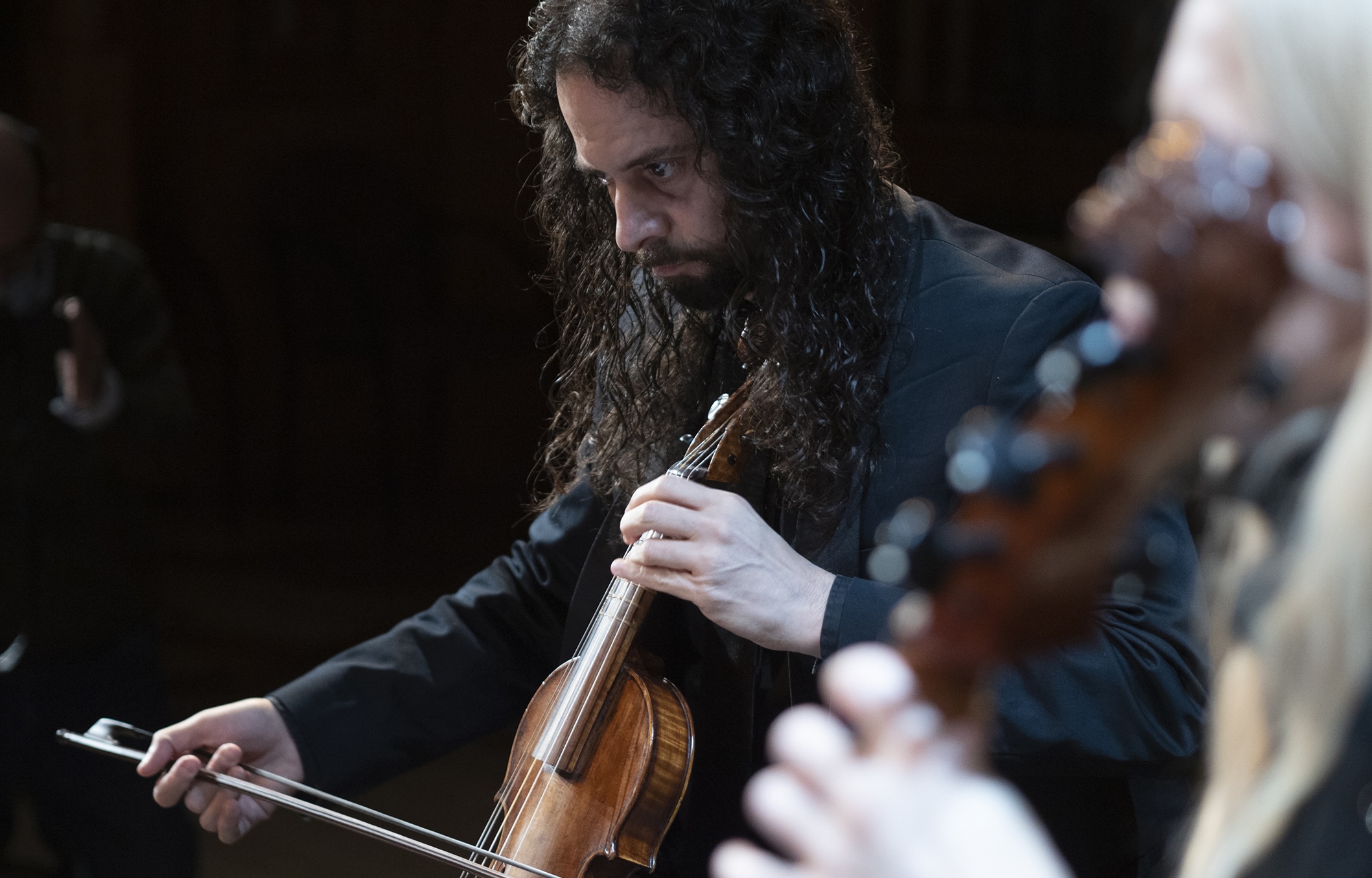
El dulce trato hablando: the music of Alonso Mudarra (c.1510–1580)
When in 1536 Luis Milán published in Valencia his Libro de música de vihuela de mano intitulado El Maestro, the vihuela tradition was already well established in Spain. The books dedicated to the instrument throughout the 16th century—taking advantage of advances in printing techniques—reflect older traditions that evolved alongside the growing technical mastery of vihuela players and changes in musical style.
Ten years after Milán, Alonso de Mudarra, a canon of Seville Cathedral originally from Palencia, published in Seville his Tres libros de música en cifra para vihuela, confirming this development. The first two books contain instrumental pieces (a few at the end intended for the guitar, then a fashionable instrument that would eventually replace the vihuela), divided into fantasias, tientos, diferencias, dances, and glosses on sections of polyphonic masses, mostly by Josquin Desprez, regarded as the greatest composer of the recent past.
The third book is devoted to vocal pieces, encompassing all the genres cultivated in Spain since the late 15th century, in a style not very different from what Italians called cantar a la lira—a semi-improvised way of performing polyphonic repertoire in imitation of what was believed to be ancient Greek singing. A singer would take the superius line, while the accompanist would reduce the remaining voices on an instrument (plucked string or keyboard).
This program offers a significant journey, particularly through Mudarra’s third book. The first two are also represented, with a fantasia—the freest and most expressive vihuela form—along with a set of diferencias (on the famous romance Conde Claros) and a couple of glosses on sections of Josquin’s masses.
All vocal genres are brought together in the remainder of the recital: the highly popular and light-hearted villancicos (Si me llaman, Gentil cavallero, Isabel, perdiste la tu faxa); the romance (Israel, mira tus montes), darker and of biblical inspiration; the canciones (Claros y frescos ríos, Recuerde el alma dormida), more solemn and introspective—although the first is a lyrical poem by Boscán, while the second is based on the famous Coplas by Jorge Manrique; the much more dramatic sonnets (O, gelosia d’amante, Si por amar, el hombre, Por ásperos caminos, Itene all’ombra, La vita fugge), reflecting Italian influence in Spain, although some are in Spanish and one (Itene all’ombra) does not strictly follow the sonnet form; and the Latin verses (Regia qui mesto, Hanc tua Penelope, Dulces exuviae), also inherited from Italian frottola composers, who cultivated them extensively.
Polyphony is thus presented in a different way in a fundamentally polyphonic century, while in the distance one can already glimpse the emergence of Baroque rhetoric and monody.