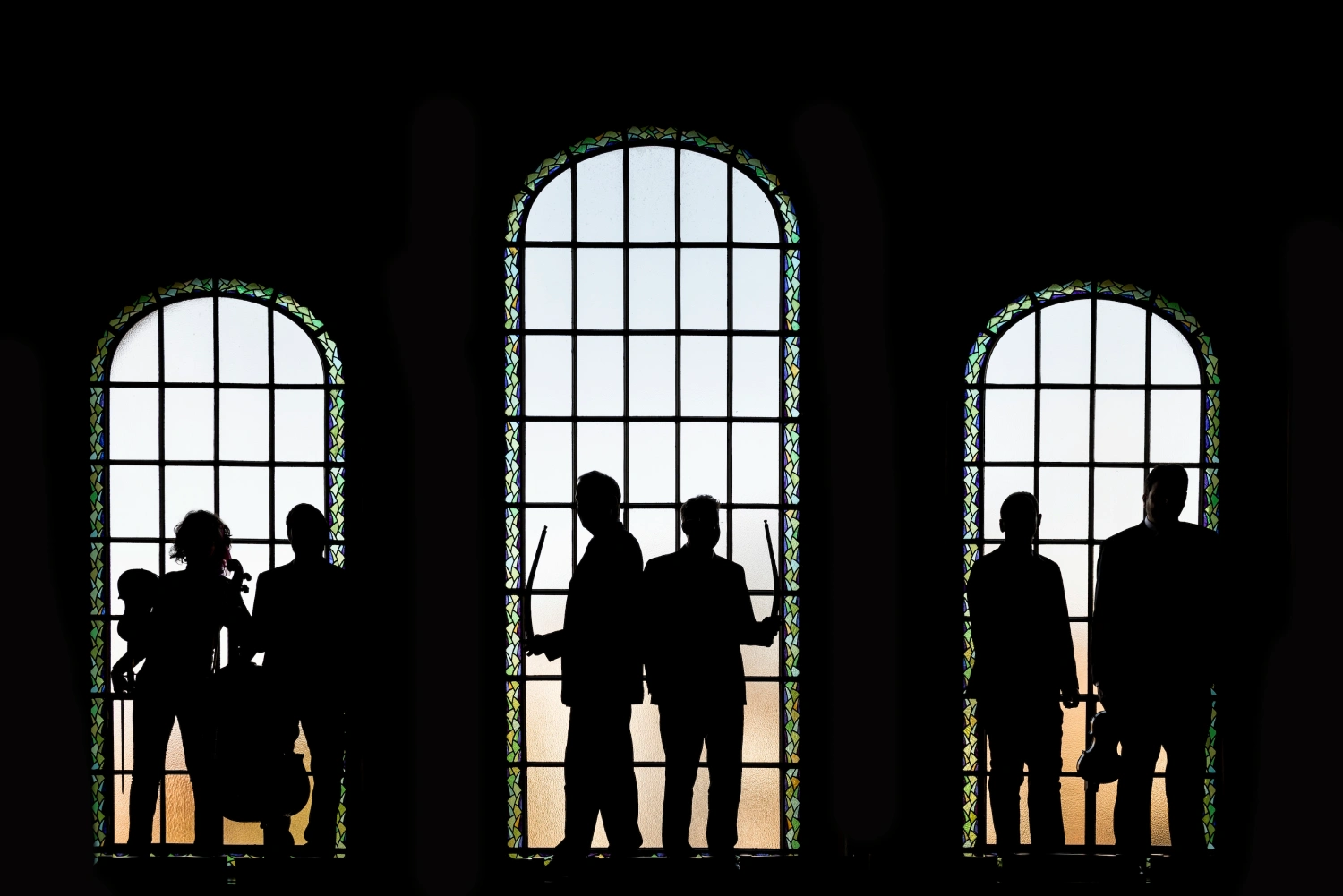

LES CORNETS NOIRS (Switzerland)
Throughout his career, Johann Sebastian Bach maintained a significant relationship with Dresden and the musicians of its court. During his first visit in 1717, he performed for the court and for all the members of its orchestra, likely giving him the opportunity to make the acquaintance of such important musicians as the flautists Pierre-Gabriel Buffardin and Johann Joachim Quantz, the oboist Johann Christian Richter, the lutenist Silvius Leopold Weiss, the violone player Jan Dismas Zelenka, and the violinists Francesco Maria Veracini and Johann Georg Pisendel.
From then on, he often visited the city to perform, test organs, and meet his colleagues from the Dresden Hofkapelle. After the death of Augustus the Strong on 1 February 1733, Bach composed the “Kyrie” and “Gloria” that would later form part of the Mass in B minor. He sent them, together with a dedication, to Augustus’s son and successor, Frederick Augustus II, in a letter dated 27 July 1733, hoping to obtain the title of “Saxon Electoral Court Composer.”
Sadly, the work was not performed at the time. However, as a result of his petition to the new ruler in Dresden — King of Poland and Grand Duke of Lithuania — Bach received the title of Royal Court Composer some three years after his request. In December of that same year, 1736, Bach gave a two-hour organ concert on the newly built Gottfried Silbermann organ in the Frauenkirche.
Our programme tonight focuses on the relationship between Bach’s works for violin and basso continuo and the music of the concertmasters and violinists of the Dresden orchestra: Francesco Maria Veracini, Johann Paul Westhoff, and Johann Georg Pisendel.
FRANCESCO MARIA VERACINI (1690–1768)
Sonata in A major Op. 1 No. 7 [Dresden, 1721]
JOHANN SEBASTIAN BACH (1685–1750)
Sonata in e minor BWV 1023 [Weimar (?), c. 1714-1717]
JOHANN PAUL VON WESTHOFF (1656–1705)
Sonata No. 3 in d minor [Dresden, 1694]
JOHANN GEORG PISENDEL (1687–1755)
Sonata in c minor BWV 1024 [Dresden, c. 1725]
JOHANN SEBASTIAN BACH (1685–1750)
Sonata in A major BWV 1015 [Köthen (?), 1717-1723]
RODOLFO RICHTER – violin (Brazil / United Kingdom)
JAMES JOHNSTONE – organ (United Kingdom)
RODOLFO RICHTER
British-Brazilian violinist Rodolfo Richter has built an international career as a director, soloist, chamber and orchestral musician, concertmaster, teacher, and composer. He is a frequent guest director and soloist with leading period-instrument ensembles, including Tafelmusik (Toronto), Arion (Montréal), Portland Baroque Orchestra, Orchestra of the Age of Enlightenment, Academy of Ancient Music, and B’Rock.
Described by the international press as “one of the most inspirational Baroque violinists of his generation,” Richter has long been a prominent chamber musician and leading violinist of acclaimed ensembles such as The Palladian Ensemble, Florilegium, the Steinitz Bach Players, and Theatre of the Ayre. He has appeared in many of the world’s foremost concert venues, including Wigmore Hall, the Concertgebouw Amsterdam, Konzerthaus Berlin, the Musikverein Wien, and Carnegie Hall, New York.
A highly sought-after guest concertmaster, he has led ensembles including The English Concert, Concerto Köln, Cappella Mediterranea, Pygmalion, and the Royal Scottish National Orchestra. He collaborated with distinguished conductors such as Gustav Leonhardt, René Jacobs, Christopher Hogwood, Trevor Pinnock, Mariss Jansons, and Pierre Boulez. He served as concertmaster of the Academy of Ancient Music (2005–2015) and B’Rock (2009–2018).
Committed to education, Richter directed the Early Music Course and Festival at the Oficina de Música de Curitiba in Brazil from 2012 to 2025 and was Professor of Baroque Violin at the Royal College of Music in London from 2007 to 2015.
Initially trained in composition by Hans Joachim Koellreutter, Richter later studied with Pierre Boulez. His principal violin teachers were Klaus Wüsthoff and Pinchas Zukerman, while Monica Huggett guided his specialization in Baroque violin. Richter was a prizewinner at the International Early Music Competition for Ensembles in Bruges (2000) and won first prize at the Antonio Vivaldi International Violin Competition (2001).
JAMES JOHNSTONE
After studies in London and Holland, harpsichordist and organist James Johnstone has forged a career as a recitalist, chamber musician, continuo player, and teacher. His recordings include eight solo discs featuring works by Blow, Gibbons, E. Pasquini, Cornet, the Elizabethan virginalists, and a Bach organ recital. In 2015, he undertook a series of Bach recordings on historical instruments for Metronome Recordings, of which Volume 2 received a Diapason d’Or. Both Volume 3 of the Bach series and François Couperin’s two masses were due for release in 2019. Johnstone is Professor of Early Keyboards at the Guildhall School of Music & Drama and at Trinity Laban Conservatoire of Music and Dance.


Kretinga Franciscan Church
July 30, 2026
19:00
LES CORNETS NOIRS (Switzerland)


Kretinga Franciscan Church
August 1, 2026
19:00
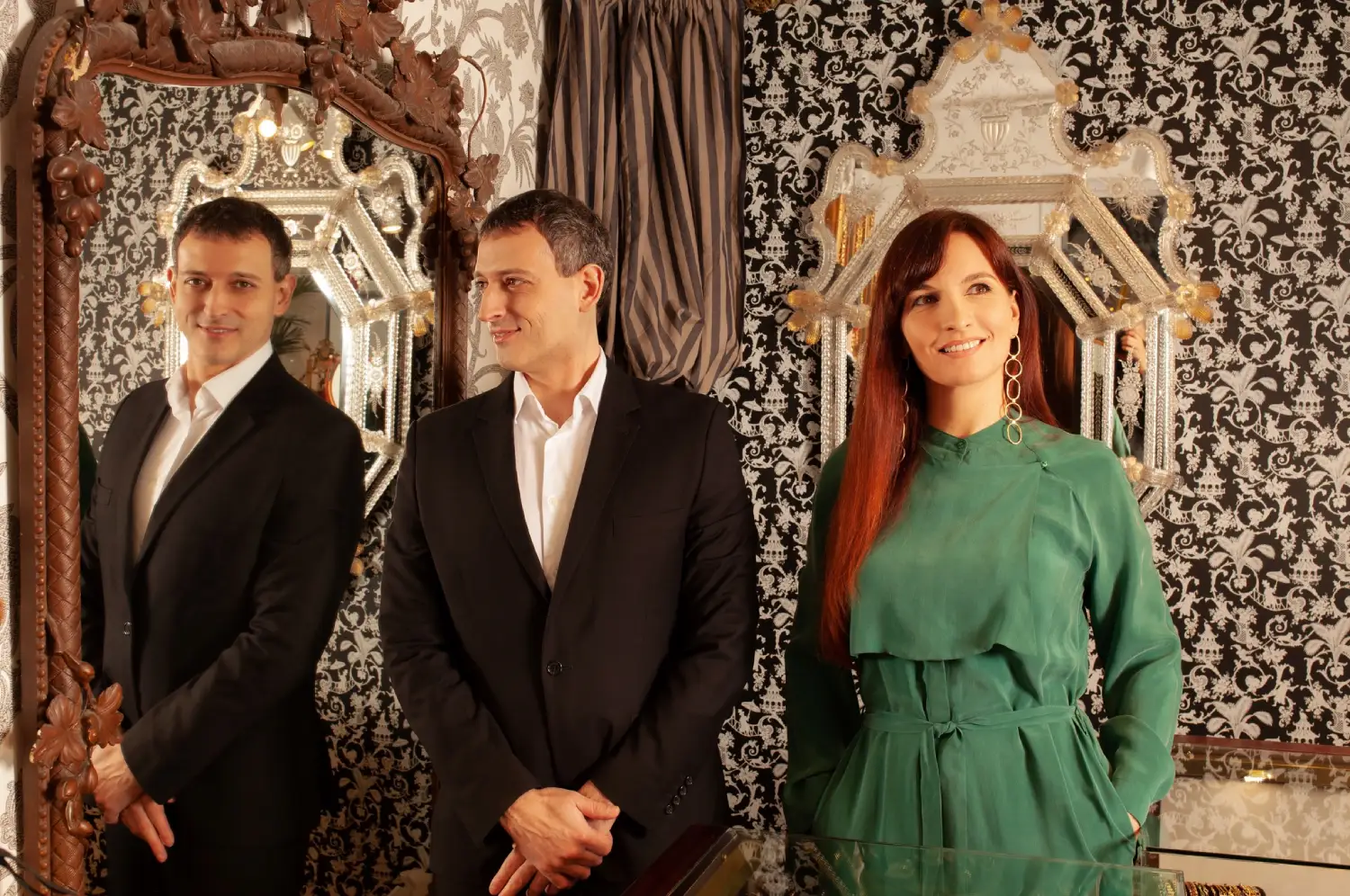
CANTO FIORITO (Lithuania): RODRIGO CALVEYRA, artistic director, RENATA DUBINSKAITĖ, mezzo-soprano


Kretinga Franciscan Church
August 4, 2026
19:00
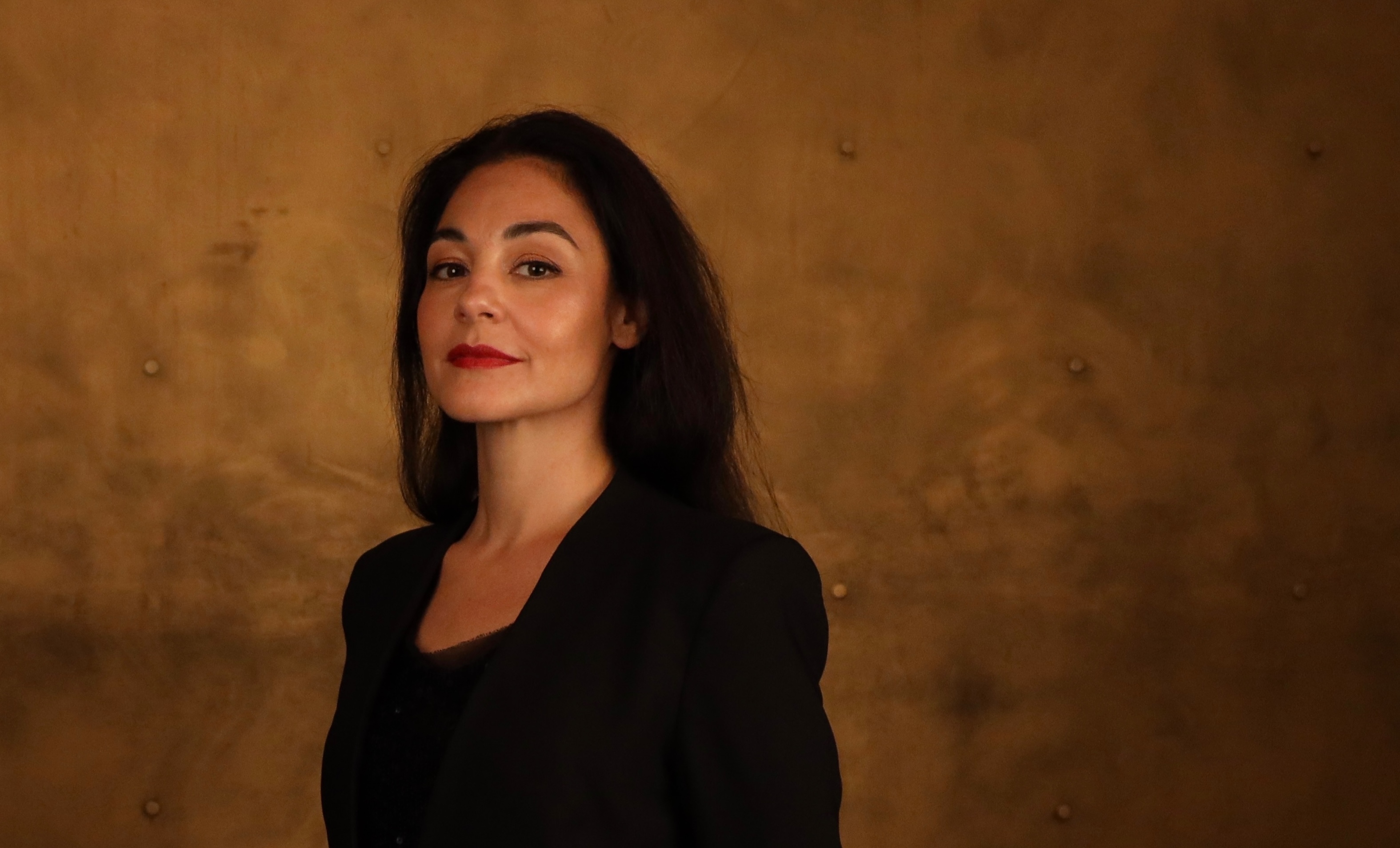
MARIA CRISTINA KIEHR, soprano (Argentina / Switzerland), ARIEL ABRAMOVICH, vihuelas de mano (Argentina / Spain)

Kretinga Franciscan Church
August 9, 2026
19:00
ANA QUINTANS, soprano, FERNANDO MIGUEL JALÔTO, organ (Portugal)

Kretinga Franciscan Church
August 14, 2026
19:00
MASSIMILIANO RASCHIETTI, organ (Italy)

Kretinga Franciscan Church
August 16, 2026
19:00
ACCADEMIA DEL PIACERE (Spain): FAHMI ALQHAI, artistic direction